
Caspian Sea: Did Ukraine Deliberately Strike Iran?
A Ukrainian drone hits an Iranian vessel in the Caspian Sea. One dead.
Zelensky claims the attack as a success. Then, 72 hours later, his foreign minister calls it “unintentional.”
Iran demands restitution.
What happened? And more importantly: why?
A stone in the Caspian
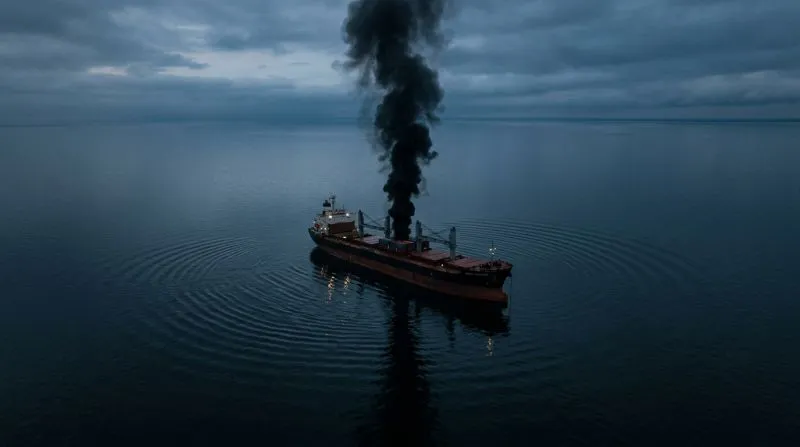
On July 25, 2026, Ukrainian drones struck the “Anna,” an Iranian commercial vessel, in the Caspian Sea. One dead. At least one wounded. The target was over 1,000 kilometers from Ukraine’s shores. Ukraine has no direct access to this inland sea.
This is not a border incident. This is a projection of force into waters Moscow and Tehran consider their backyard.
The stone is thrown. The ripple begins to spread.
Zelensky claims. Sybyha backpedals.
On July 25, Volodymyr Zelensky publicly hailed the operation. The “Anna,” he claimed, was carrying military equipment bound for Russia. A success.
Iran denies it. No evidence of military cargo has been presented.
On July 28, Andriï Sybyha, Ukraine’s acting foreign minister, called his Iranian counterpart Abbas Araghchi. The tone shifts. The attack was “unintentional.” Ukraine is not seeking escalation.
Araghchi responds: “Iran is not seeking escalation either, but has made it clear that any attack on our citizens or interests is unacceptable. There must be restitution for the losses.”
Two Ukrainian versions. Three days apart. A gaping contradiction. Zelensky says victory. Sybyha says mistake. One of them is lying — or both are telling a part of the truth they cannot fully own.
Three hypotheses for one enigma
Why would Ukraine strike Iran, 1,000 kilometers from its borders, while its own front is crumbling? Three readings compete.
1. Widen the war
Iran is Russia’s main supplier of Shahed drones. Hundreds of them launched at Ukrainian cities. Striking an Iranian vessel sends a message: we can reach you anywhere. Even here. Even in your Caspian sanctuary.
The logic holds. But it has a flaw: Ukraine is struggling on the Donbass front. Opening a second front — even a symbolic one — against a regional power of 90 million people is an immense risk. Calculated or miscalculated?
2. Trap the allies
By striking Iran, Kyiv may have hoped for an Iranian retaliation against Western interests in the region — U.S. bases in the Middle East, tankers in the Gulf, embassies. Such retaliation could have forced Washington and NATO to get more directly involved. Break the reluctance. Restart the support.
But the allies are silent. Neither Washington, nor NATO, nor Brussels has publicly commented on the attack. Silence is an answer. It speaks of embarrassment, or disagreement, or both.
The trap did not work.
3. The desperation diversion
Ukraine is losing ground in the Donbass. Losses are mounting. U.S. aid is fading. Zelensky may be seeking a media shock to divert attention. A strike at 1,000 kilometers, against a Moscow ally, in an inland sea — that is strategic theater. Spectacular. Designed for headlines.
But Sybyha’s backpedal tells a different story. Fear, after the fact. The enormity of the risk, realized too late. The call to Araghchi is not diplomatic — it is defensive. An attempt to extinguish a fire lit without checking the wind.
The geographic enigma
A Ukrainian drone does not fly 1,000 kilometers over hostile territory without a launch base. Ukraine has no access to the Caspian.
The most likely hypothesis: the attack was launched from Azerbaijan or Georgia. Two Western-allied countries, at odds with Iran. If so, it implies coordination — or at least tolerance. This widens the ripple further. Baku and Tbilisi have not commented.
The ripple continues
Iran demands restitution. The nature of that restitution is unspecified. More strikes followed: on July 29, a Russian logistics vessel was hit in the Caspian, near Kazakhstan. Ukraine did not claim it.
The circles are widening. Tehran, Moscow, Washington, Brussels, Baku, Tbilisi. And at the center, Kyiv, watching the waves it has made.
One question remains unanswered: did Ukraine act alone? If the attack was facilitated by a riparian state, the conflict has changed in nature without anyone announcing it. If it acted alone, it was a desperate gamble.
Either way, the ripple is not done spreading.
By the editorial team.
Geostrat Watch – Deciphering the world to better anticipate.
Sources :
- https://tasnimnews.ir/en/news/2026/07/26/3656373/iran-condemns-ukrainian-attack-on-commercial-vessel-in-caspian-sea
- https://www.aljazeera.com/news/2026/7/27/iran-warns-ukraine-of-retaliation-after-deadly-caspian-sea-strike
- https://www.upi.com/Top_News/World-News/2026/07/26/iran-Ukrain-attacks-vessel-Caspian-Sea/8871785114574/
- https://www.ap7am.com/en/132447/heads-of-ukrainian-iranian-foreign-ministries-hold-phone-call-after-vessel-attack
- https://www.globalsecurity.org/wmd/library/news/ukraine/2026/07/ukraine-260728-ukraine-mfa01.htm
- https://news.liga.net/en/politics/news/sybiha-speaks-with-irans-top-diplomat-after-threats-against-ukraine
- https://www.bbc.co.uk/news/articles/cwyj7yl0xndo
- https://www.cnbc.com/2026/07/26/ukraine-strikes-iranian-vessels-tehran-accuses-kyiv-of-hostile-act.html
- https://www.theweek.in/news/middle-east/2026/07/27/ukraines-drone-strike-on-an-iranian-ship-explained-a-new-front-opens.html
- https://www.globalmilitary.net/news/ukraine-drones-strike-russian-missile-boat-iran-cargo-ships-caspian-sea/