
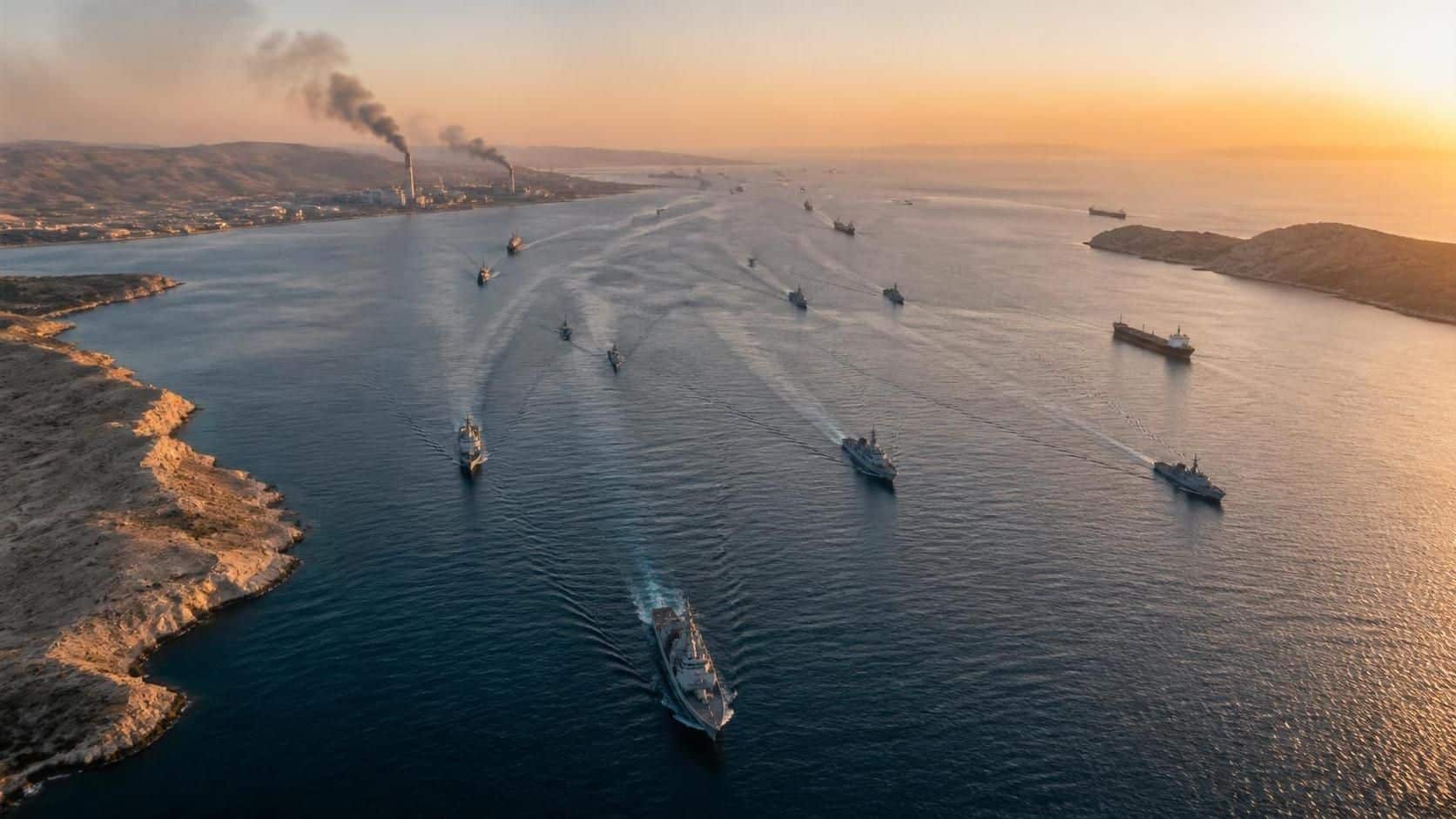
On the 15th and 16th of July 2026, the conflict between the United States and Iran crossed a threshold. Not a symbolic milestone. A real, measurable intensification, heavy with consequences.
CENTCOM carried out its sixth consecutive night of strikes. More than 170 targets were hit in a single week. Bandar Abbas, coastal installations, air defence sites, logistics depots. And, most significantly, the Darkhovin nuclear complex, still under construction. Iran, for its part, struck back. Operation Nasr 2 hit American bases in Qatar, Jordan, Kuwait, Bahrain, Syria, and as far as Oman.
On both sides, the losses are mounting. Seventeen American soldiers have been killed. More than 420 are wounded. On the Iranian side, 50 dead and 500 wounded in three weeks. Numbers that weigh heavily, on both sides of the ocean.
And then there was Hormuz.
The Strait is closed. The IRGC announced it bluntly. Twenty percent of the world’s oil passed through this chokepoint. Today, nothing. Tanker traffic has practically ceased. The markets, for their part, did not wait. The price of a barrel is soaring, and economists are revising their forecasts upwards.
The closure of the Strait is not a symbolic gesture. It is an economic weapon. Tehran knows it. Washington knows it. And the entire world is already feeling the first shocks.
Meanwhile, the arsenals are depleting. The United States has consumed nearly half of its stock of advanced missiles. Forty-five percent of PrSM, fifty percent of Patriot interceptors, more than half of THAAD. Replenishment will take months, if not years. Iran, for its part, is relying on its ballistic missiles and drones, less sophisticated, but available in larger numbers.
On the political front, threats are raining down. Donald Trump has promised to destroy all Iranian power plants, all bridges. Campaign rhetoric, or a foretaste of what could follow. The IRGC, for its part, warns that any further strike will trigger a devastating response.
The UN, through the voice of Volker Türk, has condemned the attacks on civilians and infrastructure, calling them war crimes. A statement that carries weight, but which, for now, has not altered the behaviour of the belligerents.
So where do we go from here?
The escalation could continue. American strikes go on, Iran retaliates, the Strait remains closed, oil prices soar. Munitions are running low, but political will is not weakening.
A de-escalation is possible. The human losses and the economic impact could force both sides back to the negotiating table. But for now, there is no sign of movement in that direction.
Finally, the conflict could widen. Iran has already struck in Qatar, Jordan, Oman. If the United Arab Emirates or Saudi Arabia were hit, the American response would be even more massive. And the entire region would plunge into open war.
One thing is certain. The Strait of Hormuz is closed, and the world is discovering just how dependent it was on it. Munitions are running low, and the great powers are discovering that they are not inexhaustible. Men are falling, and families are grieving.
This conflict is no longer a war of surgical strikes. It is a war of attrition. Long, costly, and with no clear end in sight.
By the editorial team
Geostrat Watch – Deciphering the world to better anticipate.