
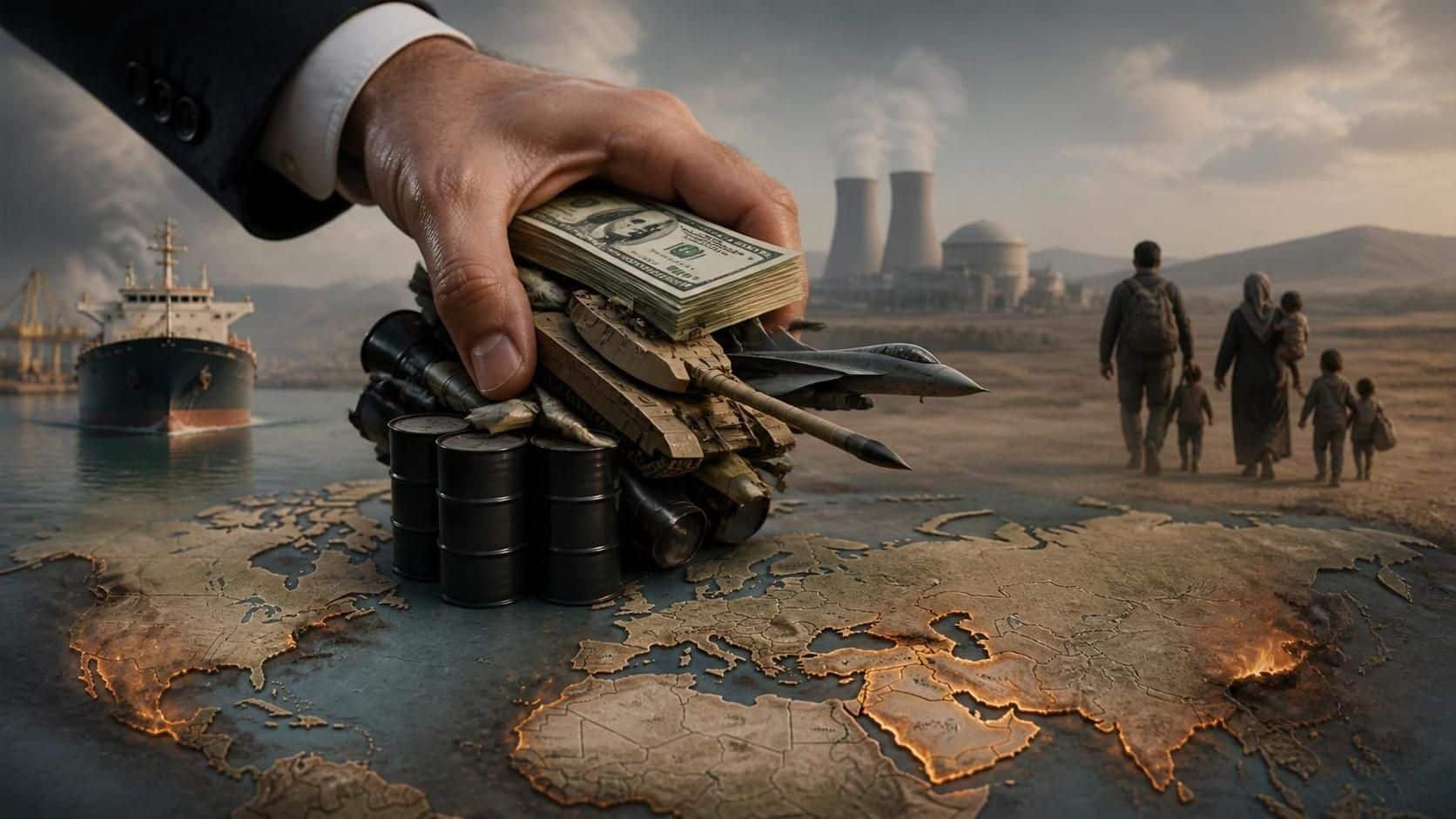
A 469-million-dollar factory. In Mesquite, Texas, it was supposed to produce shells for the US Army. Opened in May 2024, it has not produced a single compliant piece of metal in two years. Not one.
The Army was aiming for 100,000 shells per month by October 2025. It is producing 36,000. The new target, 140,000 by December 2027, already seems out of reach.
This factory that is not running is more than an industrial failure. It is a symptom.
Meanwhile, the American debt is approaching 40 trillion dollars. An abstract figure, until you compare it to something else. In 2025, the interest on this debt cost 970 billion. More than the defence budget. More than the Medicare budget. Greg Fleming, of Rockefeller Capital Management, put it plainly: “We spend more on interest than we do on defense. It’s a fantastic amount of money to have borrowed.”
Put another way: America pays its creditors more than it pays its soldiers.
And yet, the machine rolls on. At the Ankara summit in July 2026, eight NATO countries announced the creation of a military bank. A common fund to finance defence, based in Canada. A few days earlier, in Paris, a coalition of ten countries launched the Freya system, a cheaper alternative to the Patriot, developed by Fire Point. Announced timeline: twelve months.
Twelve months. In a war where munitions run dry in a matter of weeks.
Europe is embarking on an unprecedented arms race, but with uncertain timelines, colossal budgets, and an industrial capacity that remains far below requirements. The technological promises are ambitious. The reality is less so.
And then there is the oil.
The port of Fujairah, in the United Arab Emirates, was put out of service after an Iranian attack. An intercepted drone crashed into the port area. Six million barrels were withdrawn from the market. The IRGC is now threatening to strike Dubai, Abu Dhabi, Jebel Ali.
The Strait of Hormuz is already closed. If Bab-el-Mandeb were to follow, the price of a barrel could reach 200 dollars. A prospect that shakes Western economies, already weakened by inflation and debt.
So what could happen?
A systemic crisis is possible. Debt explodes, industry cannot keep up, oil prices soar. Europe, which does not have the means to defend itself alone, finds itself caught between a weakened America and growing threats.
A strategic awakening is also conceivable. The United States reforms its industry, Europe accelerates, and a new balance takes shape. But that will take time. And time, precisely, is not an ally.
Finally, a gradual collapse cannot be ruled out. Military and financial attrition erodes Western capabilities, while China and Russia strengthen their positions, unhurried and silent.
The West is facing a triple challenge: to produce, to finance, to protect. Today, all three seem to be faltering. The bill for decades of risky choices is coming due. And no one yet knows who will pay it.
By the editorial team
Geostrat Watch – Deciphering the world to better anticipate.