
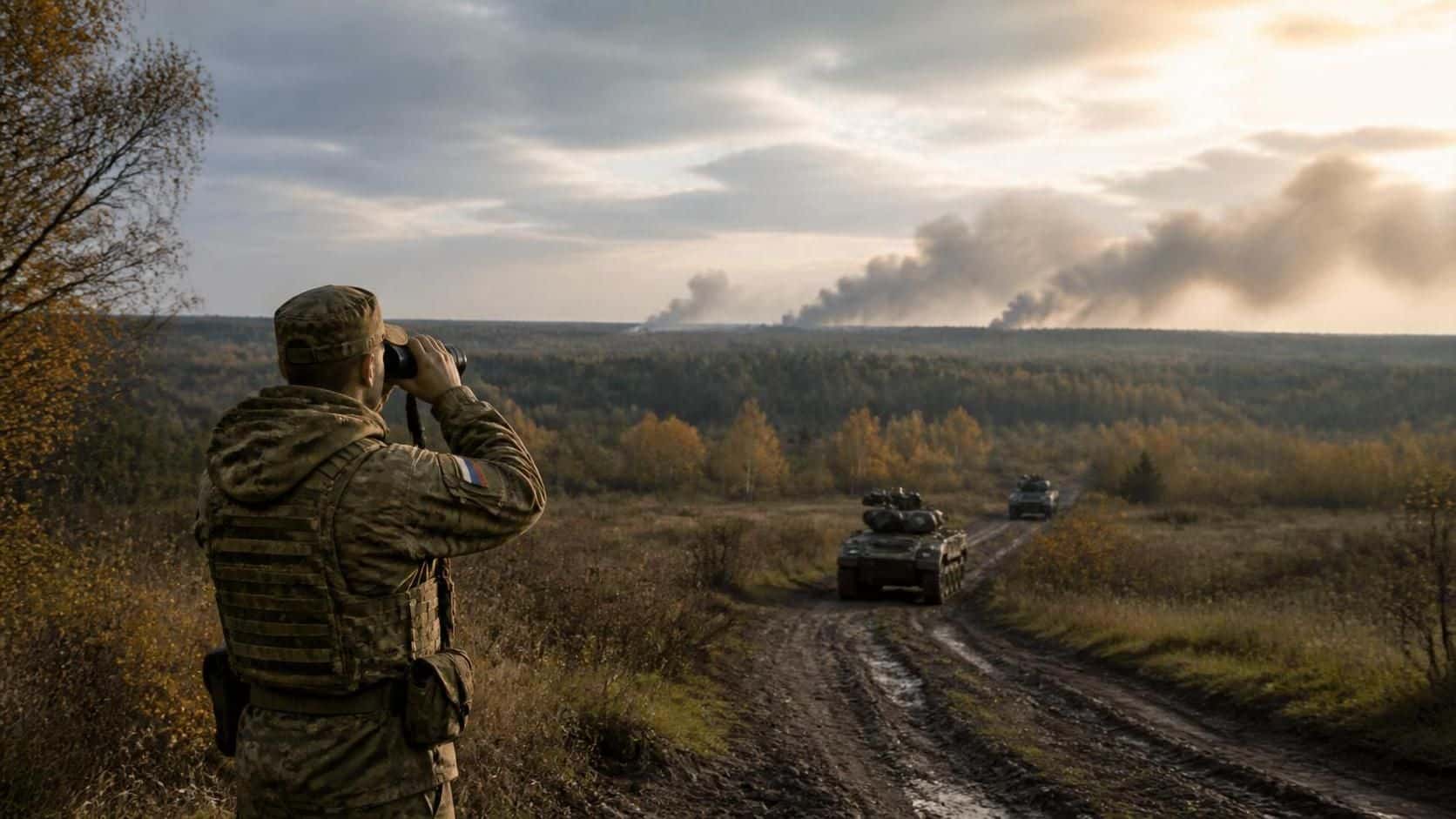
The 15th and 16th of July 2026 saw a new spike in the war in Ukraine. No spectacular shift, no sudden collapse. But a methodical intensification, on several fronts at once.
In the north, Russian troops advanced towards Sumy. Fighting broke out in the wooded areas of Pisarivka and Mohrytsia. According to the ISW, Russian forces are gaining ground, without a major breakthrough, but with a clear logic: stretching Ukrainian reserves, forcing them to disperse, preventing them from concentrating elsewhere.
In the south, strikes on the ports of Odesa and Chornomorsk left their mark. The Russian Defence Ministry confirmed targeted fire on fuel tanks and ships carrying military equipment. The cargo ship Venturo was hit. One sailor died. Seventeen others were evacuated.
The “Rapid” plant, near Kyiv, was destroyed. It was used to assemble long-range drones. Ukrainian logistics are being targeted, methodically, relentlessly.
And then there was Zaporizhzhia.
A Ukrainian drone struck a service vehicle at the nuclear power plant. Chief engineer Alexandre Iakovlev died. His driver, Dmitri Philippov, also. Rosatom called it a “terrorist” act. The IAEA, through its director general Rafael Grossi, described the attack as “unacceptable”. Ukraine denied any responsibility.
Two men are dead. And the plant remains under tension. Since the beginning of the conflict, thirteen people have been killed and forty-eight wounded around the site. Each incident is a reminder that the nuclear risk has never disappeared. It has simply faded into the background.
On the political front, things are also moving in Kyiv. Reports are circulating of a possible sacking of Defence Minister Mykhaïlo Fedorov. His successor would be Igor Klymenko, the current Interior Minister. Several Ukrainian media outlets are reporting tensions over the defence budget and corruption issues. But nothing is yet confirmed.
Protests have taken place in several cities. Their scale remains modest. But the unease is there, palpable, among a population exhausted by three years of war.
In Lviv, images of forced recruitment have caused shock. A woman in tears, begging the officers not to take her partner away. These scenes stand in stark contrast to the official narrative of a “voluntary” mobilisation. The need for men is immense, and the recruitment methods are drawing growing criticism.
Meanwhile, Ukraine’s Black Sea ports are running at a reduced pace. A third of their export capacity is reportedly out of service. Four out of thirteen terminals are no longer functioning. Shipping companies are reluctant to send their vessels into dangerous waters. For a country whose economy depends on grain and vegetable oils, this is a slow bleed.
So where do we go from here?
Russia is pursuing its strategy of attrition. It strikes infrastructure, gains ground, and waits for time to do its work. Ukraine is resisting, but the fatigue is showing. The West is watching, helping, but not intervening directly.
The conflict is entering a phase where logistics, morale and resilience matter more than drones and missiles. And Zaporizhzhia, silent, remains the dark spot of this war. A nuclear accident is not likely. But it is not impossible. And that uncertainty is enough to cast a shadow over the entire region.
Nothing is decided yet. But the lines are moving. Slowly. Steadily. And in this war of attrition, time may well be the deadliest weapon.
By the editorial team
Geostrat Watch – Deciphering the world to better anticipate.