
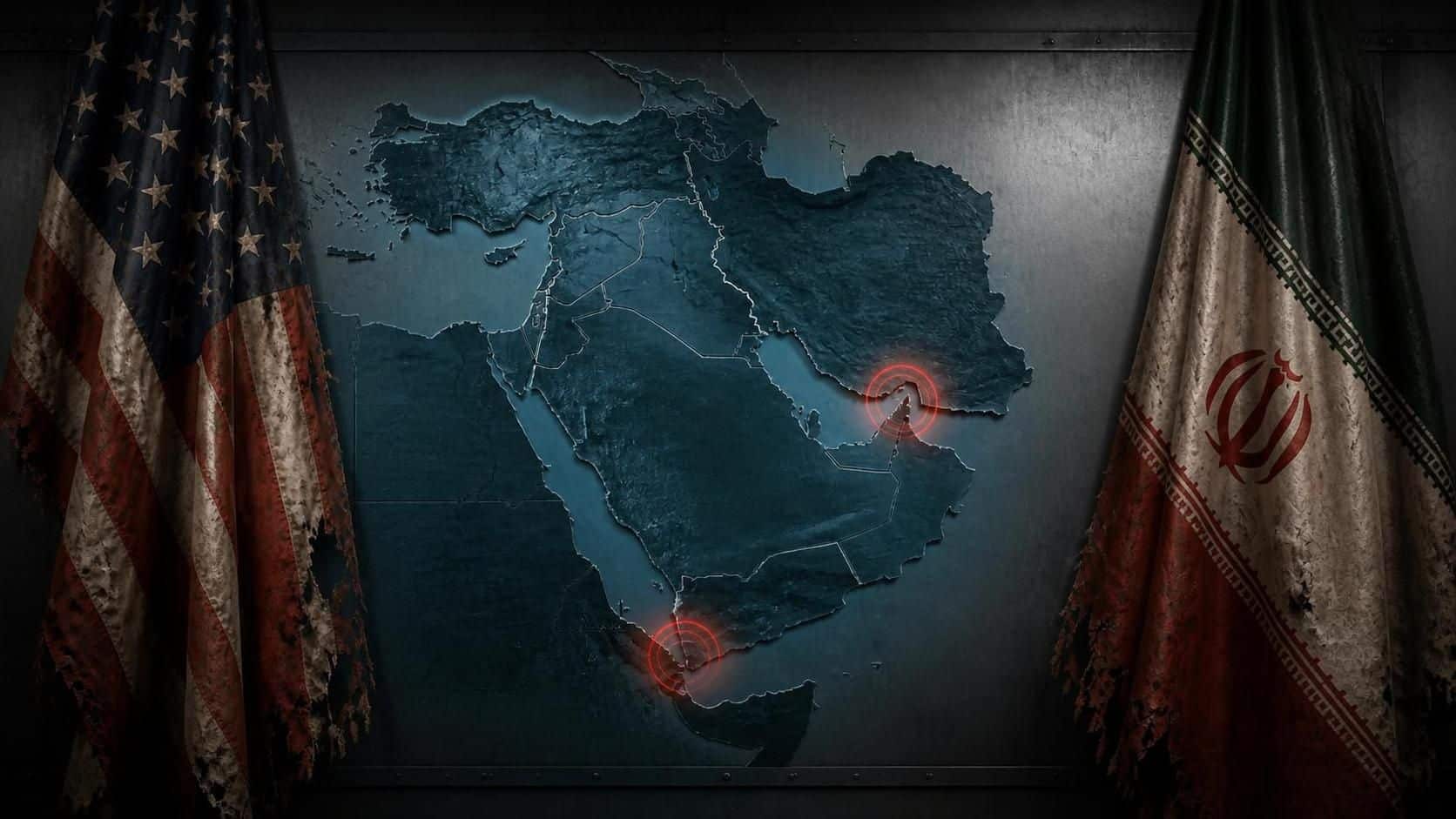
The conflict between Iran and the United States has entered its thirteenth consecutive night of strikes. Thirteen nights of bombing, drones, missiles. And yet, nothing has fundamentally shifted. Positions are frozen, red lines are maintained, and diplomacy is stalling.
Here is the state of play, factual and sober.
The Military Situation
The United States is continuing its air campaign. B-1Bs have been deployed from the United Kingdom. Strikes are targeting the infrastructure of the Islamic Revolutionary Guard Corps. The naval headquarters in the north of the country was hit. Targets have been struck in the southwest, near Ahvaz. Iran claims a nuclear power plant under construction at Dar Khoveyn was also hit.
Iran, for its part, is conducting drone and missile attacks on American bases throughout the Gulf. In Kuwait, three ammunition hangars were destroyed at Al Udairi, a munitions depot and six shelters at Ali Al Salem, and an electronic warfare unit at Al-Adairi. In Bahrain, the 5th Fleet control tower was damaged. An Amazon data centre was destroyed.
American losses stand at least 18 dead and around 570 wounded. On the Iranian side, at least 4 dead and 5 wounded have been recorded near Ahvaz. An earlier tragedy cost the lives of 168 schoolchildren.
The Strait of Hormuz has been closed since 15 July. The IRGC has stopped three tankers attempting to cross the passage. Around 400 ships and 6,000 sailors are stranded. No supertankers or LNG carriers are transiting.
At the same time, the Houthis have opened a second front in the Red Sea. Two Saudi tankers have been targeted. One of them, the Encelia, caught fire. The Houthi blockade threatens 7% of the world’s oil supply.
The Economic Consequences
The Iran-United States conflict is not only military. It is also economic, and it is hitting hard.
Brent crude has exceeded 100 dollars a barrel. American diesel has crossed the 5 dollars a gallon mark. Petrol has risen by comparable amounts. Twenty percent of the world’s oil transits through Hormuz. A further seven percent is threatened by the Houthi blockade of Bab-el-Mandeb. If both straits were to be blocked simultaneously, more than a quarter of the world’s supply would disappear.
In the United States, pump prices are weighing on household morale and on the war’s popularity. The Pentagon has asked for an additional 87 billion dollars to continue operations. Costs already stand at 37.5 billion. A bill added to a public debt approaching 39 trillion dollars.
In Iran, oil sanctions have been reinstated, suspending exports. Iranian assets abroad are threatened with seizure by the Trump administration. Foreign Minister Abbas Araghchi denounces an “incendiary precedent”. The already fragile Iranian economy is suffering the double blow of strikes and sanctions.
The European Union is also affected. Soaring energy prices are weighing on its competitiveness. Brussels is threatening retaliatory measures against Washington if customs duties are broken. The war in Iran is weakening the entire global economy, already strained by the Ukrainian conflict and trade tensions.
The Political Situation
In the United States, the war is weighing heavily. Only 28% of Americans believe it was worth it. A level comparable to the worst moments of the Afghan war. The House of Representatives has approved a resolution ordering the withdrawal of troops. The Senate is divided. Congress is going on recess, blocking any new decisions. Donald Trump, meanwhile, is threatening: “We’re going to destroy Pickaxe Mountain. Tell the Iranians to get ready.” He is also threatening Iran and the Houthis with “major military punishment.”
In Iran, the new Supreme Leader, Mojtaba Khamenei, has sworn to avenge his father’s death. He has not appeared in public since March. The regime rejects any negotiation as long as the United States does not back down. The Foreign Minister warns that any country participating in American aggression will be a legitimate target.
The Diplomatic Situation
Iran has rejected a ceasefire offer transmitted by Iraqi Prime Minister Ali al-Zaidi. Tehran refuses any temporary agreement and believes the problem is the American approach, not the lack of mediators.
Russia is ready for a political solution, but condemns the American strikes. China has not submitted a resolution to the Security Council. The European Union is threatening retaliatory measures against Washington if customs duties are broken. Israel is opening public shelters. Trump has stated Israel could join the strikes, but that he “needs no one.” The UN, through the voice of Antonio Guterres, is alarmed: the situation is “out of control” and “on the brink of the unimaginable.” The High Commissioner for Human Rights has called for the evacuation of the 6,000 stranded sailors.
The Lavrov-Rubio meeting in Manila allowed an exchange on the two ongoing conflicts. On Ukraine, Rubio acknowledged the failure of the “3+2” format and called for new ideas, without proposing any. On Iran, the two ministers discussed the situation in the Persian Gulf. No concrete progress was announced.
The Scenarios
Escalation is the most likely scenario. Iran is threatening to strike Tel Aviv and close Bab-el-Mandeb if Trump strikes Tehran. The United States is continuing its strikes, night after night. Trump is considering the use of special forces for Pickaxe Mountain.
De-escalation is unlikely in the short term. Iran has rejected the Iraqi outstretched hand. Trump continues to threaten. Both sides are standing their ground.
A ground invasion, once mentioned, is no longer directly discussed. But special forces are on the table.
The Iran-United States conflict is not a lightning war. It is a war of attrition. Military, human, economic. Every night, strikes. Every day, deaths. And for now, no way out.
By the editorial team
Geostrat Watch – Deciphering the world to better anticipate.
Sources:
https://www.nytimes.com/2026/07/23/world/middleeast/iran-strikes-us-military.html
https://www.reuters.com/world/middle-east/us-carries-out-new-strikes-iran-targeting-military-sites-2026-07-23/
https://www.washingtonpost.com/world/2026/07/23/iran-attacks-us-bases-kuwait-jordan/
https://www.bbc.com/news/world-middle-east-66123456
https://www.lemonde.fr/proche-orient/article/2026/07/23/les-houthis-menacent-de-bloquer-le-detroit-de-bab-el-mandeb_6123456_3218.html
https://www.france24.com/en/middle-east/20260723-us-iran-war-casualties
https://www.wsj.com/politics/trump-threatens-major-military-punishment-iran-houthis-12345678
https://thehill.com/homenews/house/5985147-iran-war-powers-resolution-house-vote/
https://www.cnn.com/2026/07/23/politics/iran-war-poll/index.html
https://www.timesofisrael.com/irans-new-supreme-leader-vows-revenge-for-his-fathers-death/
https://www.aljazeera.com/news/2026/7/23/iran-rejects-us-ceasefire-proposal
https://tass.com/politics/2163989
https://tass.com/world/2163943
https://news.un.org/en/story/2026/07/1145678
https://www.presstv.ir/Detail/2026/07/23/iran-warns-countries-participating-in-us-aggression
https://www.reuters.com/business/energy/oil-prices-rise-brent-tops-100-2026-07-23/
https://www.bbc.com/news/world-middle-east-66145678
https://www.defensenews.com/pentagon/2026/07/23/pentagon-faces-cash-crunch-iran-war/