
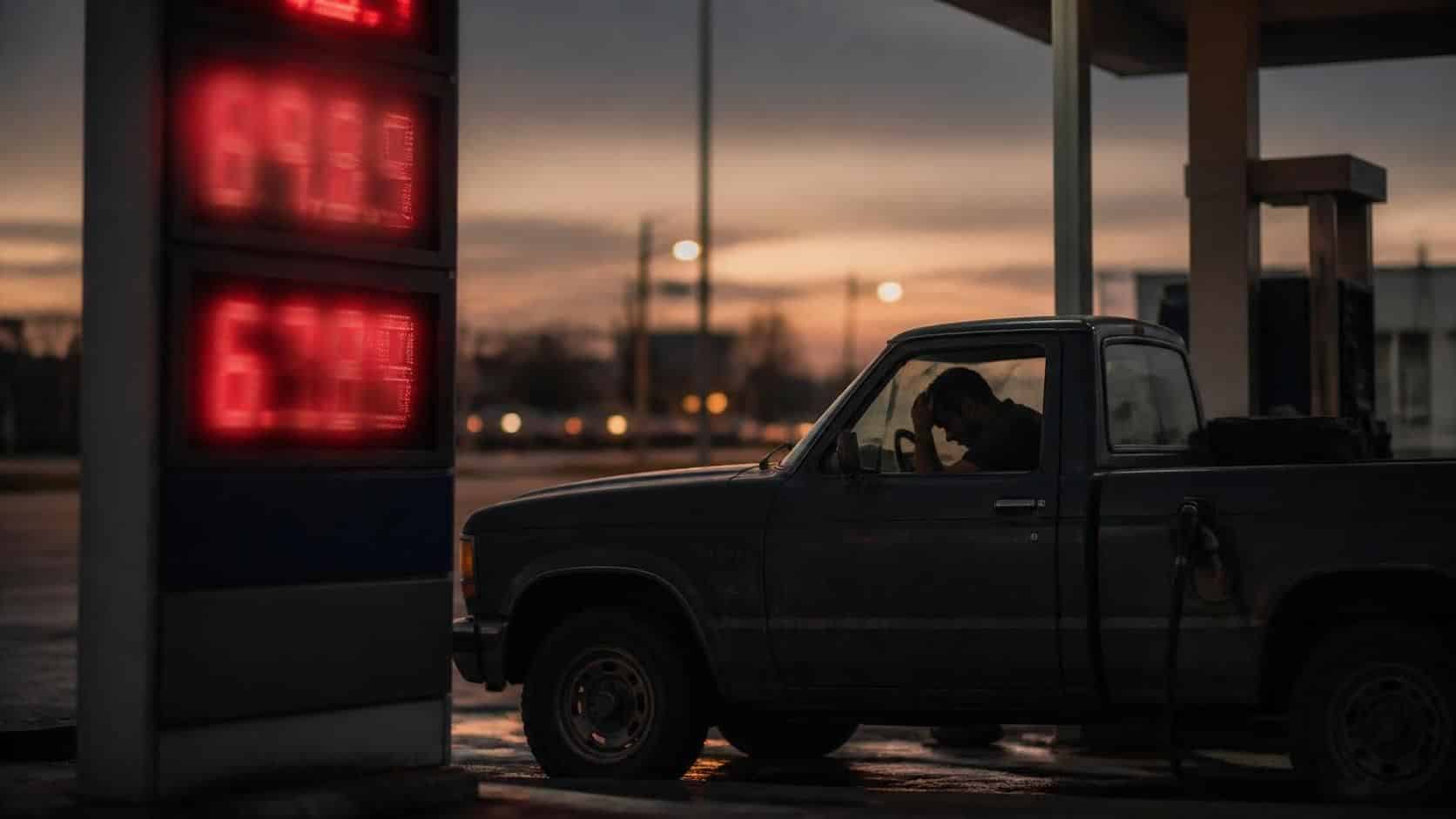
On 20 July 2026, the United States Strategic Petroleum Reserve fell to 311.4 million barrels. This is the lowest level since March 1983. Forty-three years ago, Ronald Reagan was president, and the Cold War was in full swing. Today, it is the war against Iran that is emptying the tanks.
Since February 2026, Washington has drawn 104 million barrels from the Strategic Petroleum Reserve. A total release plan of 172 million barrels has been approved. Total crude stocks, which include commercial reserves, have fallen to 726.2 million barrels. A level not seen since 1984.
And it is not over yet.
While reserves are dwindling, prices are soaring. American diesel has exceeded five dollars a gallon. Petrol has risen by 35 to 70% since the start of the conflict, according to several sources. The price of Brent crude, which had peaked at 126.41 dollars a barrel over the last twelve months, fell back to 88 dollars on 20 July. A deceptive lull. Experts expect a further surge if the Strait of Hormuz remains closed and if the Houthis carry out their threats on Bab-el-Mandeb. Some are talking about a barrel at 200 dollars in the event of a double blockade.
The Russian ban on diesel exports is making matters worse. Moscow has restricted its sales to destabilise Western markets. The result: American domestic prices are climbing, and filling up the tank is becoming a luxury for millions of households.
Experts are also worried about technical constraints. The SPR is stored in ageing salt caverns along the Gulf of Mexico. If the level drops too low, extraction could become more difficult, even impossible in some pockets. The American Petroleum Institute has sounded the alarm. The Department of Energy, for its part, recalls that the SPR is “an essential energy security tool, but it should not be used as a permanent solution to market imbalances.”
But that is exactly what is happening.
The war against Iran is emptying the reserves. Sanctions and disruptions to maritime routes are causing prices to explode. And Washington finds itself trapped: continue to draw on stocks to stabilise the market, or preserve them for an even more serious emergency.
Three trajectories are taking shape.
A prolonged war, first. The conflict continues, reserves run dry, prices climb, and the energy crisis worsens. A diplomatic agreement, next. International mediation allows the reopening of Hormuz and stabilises prices. A domestic energy crisis, finally. Prices reach unsustainable levels, consumption collapses, and the economy enters recession.
The United States has reached an energy tipping point. The war against Iran is emptying the strategic reserves, while sanctions and disruptions to maritime routes are causing prices at the pump to explode. A crisis that could, in time, force Washington to slow its war effort. Not by strategic choice. By necessity.
By the editorial team
Geostrat Watch – Deciphering the world to better anticipate.
Sources
https://edgenews.com/world/us-draws-on-strategic-oil-reserves-as-iranian-hostilities-continue/
https://www.reuters.com/markets/commodities/us-strategic-petroleum-reserve-drops-lowest-level-since-1983-2026-07-17/
https://gtvnewsng.com/us-strategic-oil-reserves-drop-to-1983-levels/
https://www.axios.com/2026/07/17/russia-diesel-oil-drones
https://www.cbsnews.com/news/us-strategic-petroleum-reserve-lowest-level-1983-iran/
https://www.washingtonpost.com/world/2026/07/19/us-iran-military-plans-war/
https://www.boursorama.com/bourse/matieres-premieres/cours-petrole-brent/BRENT/
https://www.ukranews.com/amp/in-washington-they-are-preparing-for-a-serious-war-with-iran.html